
Using CPT 97530 Correctly: The “-ing” Code Misunderstood
In skilled nursing facilities, CPT 97530 (Therapeutic Activities) is one of the most functionally rich, clinically powerful interventions therapists can provide. Yet despite its value, it is often misunderstood, misapplied, and underutilized.
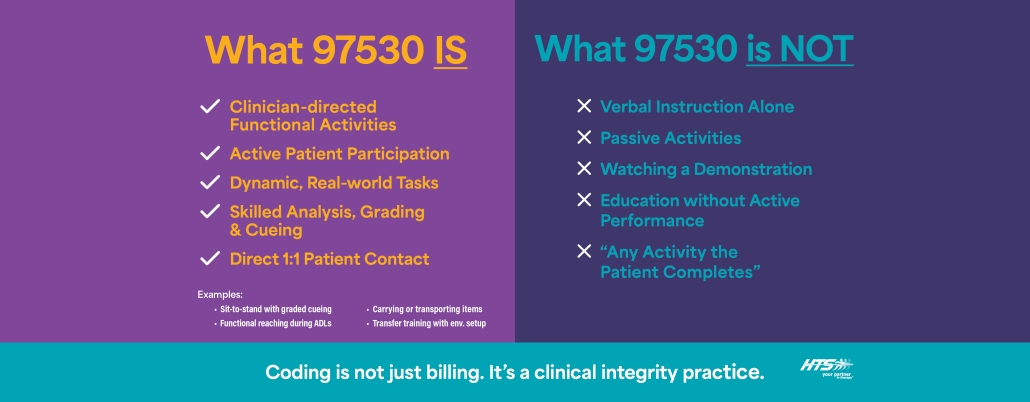
Many clinicians refer to 97530 as the “–ing code” because it involves engaging patients in doing meaningful, functional activities. However, a common misconception persists: that any activity or education falls under 97530. In reality, education alone does not meet the criteria for 97530, and selecting it simply because teaching occurred is a coding error.
What 97530 Actually Is
The CPT definition of 97530 is “therapeutic activities, direct (one-on-one) patient contact (use of dynamic activities to improve functional performance), each 15 minutes.”
This includes clinician-directed, functional task-oriented activities such as:
- Lifting
- Carrying
- Handling
- Reaching
- Transferring
- Transporting
It is not just performing an activity, it is the therapist’s analysis, grading, cueing, environmental setup, and clinical problem-solving during the functional task that make the service skilled.
What 97530 Is Not
97530 is Not:
- Verbal instruction without active performance
- Watching a demonstration
- A passive experience
- Simply “any activity the patient completes”
If you are educating, you bill the most appropriate code for the service being taught (e.g., 97535 for self-care training). Education paired with functional performance may fall under 97530, but education by itself does not.
Are We Underutilizing 97530?
There is a strong possibility that 97530 is used less than it should be. This is not because clinicians are doing less functional retraining, but because they default to other codes when they’re actually providing therapeutic activities.
For example, if the patient is actively practicing sit-to-stand transfers with graded cueing to improve functional mobility, that activity is almost certainly therapeutic activities, even if the therapist is also instructing them.
Accurate Use of 97530 is About Ensuring:
- The code matches the intervention
- Documentation reflects the skilled service performed
- The patient receives functional, meaningful therapy aligned with SNF goals
Coding Tips for Everyday Compliance:
- Understand CPT coding definitions
- Code only what is actually performed
- Report only skilled minutes
- Ensure documentation supports each code billed
- Follow payer and regulatory rules
- Remember: each minute billed must reflect skill, intent, and necessity
Clinicians are the heart of the compliance team. Coding is not just billing. It’s a clinical integrity practice. Accurate, intentional coding protects patients, clinicians, and the SNF.
Written By: Sheena Mattingly, EVP of Quality & Compliance

